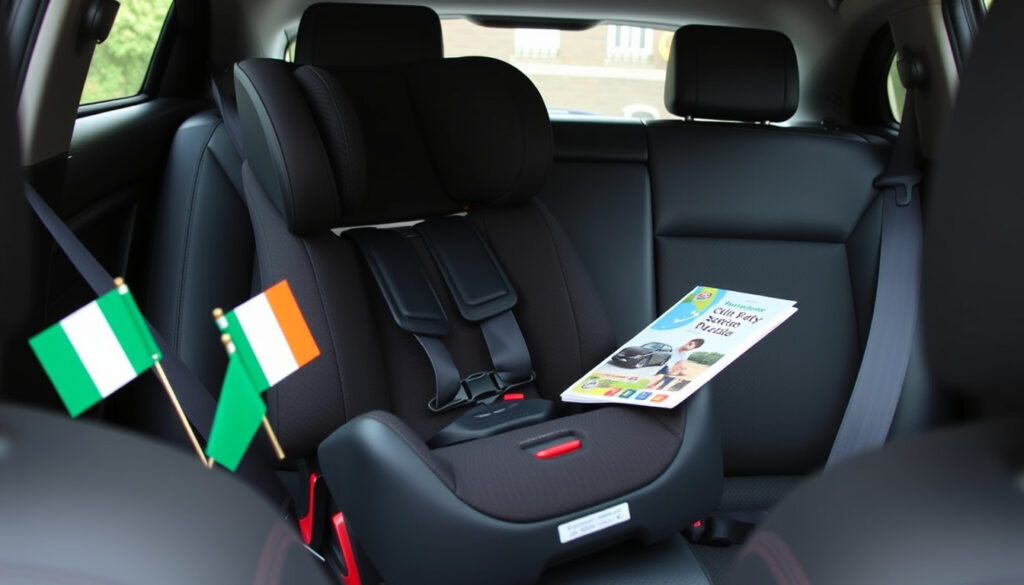
Booster Seat Age, Laws & Safety Guide (Ireland & US)
Few things in parenting spark as much confusion as knowing exactly when your child is ready to move from a car seat to a booster — and then when they can finally ditch the booster altogether. In Ireland, the rules hinge on height and weight, not just age, and getting it wrong can mean a fine or, worse, an increased risk of injury. This guide walks through Irish and US laws, the high-back versus backless debate, and what to look for when buying a booster seat so you can make a confident, informed choice.
Minimum age for a booster seat in Ireland: 4 years · Maximum weight for a high-back booster seat: 36 kg (79 lbs) · Height requirement for booster seat use: 100 cm–150 cm · Number of US states with booster seat laws: All 50 states plus DC · Average cost of a booster seat in Ireland: €40–€150
Quick snapshot
- Booster seats reduce injury risk by 45% vs seat belt alone (Safe Kids Worldwide)
- Irish law requires child restraints up to 150 cm or 36 kg (Road Safety Authority (RSA) Ireland)
- Backless boosters not recommended under 125 cm and 22 kg (RSA Child Safety in Cars booklet)
- Exact age of transition from backless to high-back varies by child size
- Long-term safety comparison of backless vs high-back for older children is debated
- Optimal height for transitioning to an adult seat belt may vary by vehicle seat design
- Birth–4 years: rear-facing or forward-facing 5-point harness
- 4–12 years: booster seat (high-back or backless depending on size)
- 12+ years: adult seat belt (minimum 150 cm tall)
- Check your child’s height and weight regularly — the booster seat itself wears out in 6-10 years
Six key facts to know about booster seat requirements before you buy or transition:
| Fact | Value | Source |
|---|---|---|
| Legal age in Ireland | 4 years | RSA FAQ |
| Maximum weight for high-back booster | 36 kg | RSA FAQ |
| Minimum height for backless booster | 125 cm | RSA Child Safety in Cars booklet |
| US states with booster laws | All 50 states | IIHS (Insurance Institute for Highway Safety) |
| Minimum weight for booster seat in Ireland | 15 kg (33 lbs) | Halfords IE (retailer guidance) |
| Average cost range in Ireland | €40–€150 | Maxi-Cosi IE (market observation) |
What age should you sit in a booster seat?
Age thresholds for booster seats (4–12 years)
- In Ireland, the minimum age is effectively 4 years, but the legal requirement is based on height (under 150 cm) or weight (under 36 kg), as the Road Safety Authority (RSA) Ireland explains.
- Most children need a booster seat until about age 12, though the Health Service Executive (HSE) Ireland notes it depends on whether they’ve reached 150 cm and 36 kg.
- In the US, the typical requirement is booster use until age 8 or 4’9″ (about 145 cm), but some states like California mandate it until 9 years, per the Insurance Institute for Highway Safety (IIHS).
Height and weight minimums
- The minimum height for a high-back booster is typically 100 cm, and the minimum weight is 15 kg, per Halfords IE retailer guidance.
- High-back boosters are designed to hold children up to 36 kg, and the RSA strongly recommends using them for as long as possible.
- A child is ready to stop using a booster when they can sit with their back against the vehicle seat, knees bent at the edge of the seat, and the seat belt fits across their shoulder and lap properly — typically at 150 cm.
The trade-off: moving to a booster too early can leave a child vulnerable because the seat belt won’t fit correctly, increasing the risk of abdominal or spinal injury in a crash. The catch: even within legal limits, not all booster types offer the same protection.
A four-year-old may be legally old enough to sit in a booster seat in Ireland, but most four-year-olds are under 125 cm — making a high-back booster the only safe choice at that age. A backless booster at that stage would leave them with no side impact protection or head support.
Are booster seats legal in Ireland?
Irish law on child restraint systems
- Yes — booster seats are not just legal but required. Irish law states that all children under 150 cm or weighing less than 36 kg must use a child restraint system, per Citizens Information (official government advice).
- The law applies in all private cars and goods vehicles (excluding taxis and rental cars in some cases), and non-compliance can result in a fixed penalty fine of €120 and two penalty points.
- The law, confirmed by the Tusla (Ireland’s Child and Family Agency) child safety booklet, requires the restraint to be suitable for the child’s height and weight.
Groups 2 and 3 explained
- Group 2 seats (15–25 kg) and Group 3 seats (22–36 kg) correspond to booster seats. Many modern seats are sold as Group 2/3 combos.
- Group 2 seats are always high-back boosters. Group 3 includes both high-back and backless options, though the RSA advises high-back over backless whenever possible.
- If a child is in Group 2 (15–25 kg), they must use a high-back booster — backless is only allowed from Group 3 (22 kg+) and only if they are at least 125 cm tall.
What this means: you can’t simply buy any booster seat and call it a day. The type of booster must match your child’s weight and height, not just their age.
A backless booster is only legal in Ireland for children over 125 cm and weighing at least 22 kg. For a typical 4-year-old who is 105 cm and 17 kg, a high-back booster is the only legal and safe option.
The pattern: Irish law is height/weight-driven; a high-back booster is the default for most children until they reach the backless thresholds.
Can my 4 year old use a backless booster?
Why backless boosters are not recommended for 4-year-olds
- The short answer is no, and the RSA reasons: backless boosters “do not have an internal harness to hold the child in place” and lack side impact protection, as outlined in their 2016 child safety booklet.
- Most 4-year-olds are under 125 cm, so a backless booster would not be legal. The RSA recommends backless only from 125 cm and 22 kg.
- Even if a 4-year-old reaches 125 cm (rare), experts still prefer a high-back booster for better head and neck protection in side-impact collisions.
US and EU guidelines
- In the US, Safe Kids Worldwide recommends keeping children in a forward-facing car seat with a 5-point harness until at least age 4, then moving to a high-back booster. Backless boosters are only recommended once the vehicle’s seat provides adequate head support.
- EU regulations approve backless boosters only for children over 125 cm — consistent with RSA guidance.
- In practice, a typical 4-year-old in Ireland (around 105 cm) should remain in a high-back booster, not move to backless.
Some backless booster seats on the market may claim suitability from 15 kg, but Irish law and RSA recommendations override product labels: sellers can list “from 15 kg” for some older models, but the RSA’s 125 cm / 22 kg rule takes legal precedence.
What this means: for a 4-year-old, a high-back booster is the only safe and legal choice; backless is not an option until they reach the size thresholds.
Can I switch my 5 year old to a booster seat?
When to move from 5-point harness to booster
- Yes, a 5-year-old can use a booster seat if they weigh at least 15 kg (the minimum for a Group 2/3 seat) — but they should use a high-back booster, not a backless one, unless they exceed 125 cm and 22 kg.
- The RSA states that children under 125 cm are safer in a high-back booster, even if they are age 5.
- Moving from a 5-point harness to a booster too early increases the risk of “seat belt syndrome” (abdominal and spinal injuries) because the belt may ride up over the abdomen in a crash.
Weight and maturity checks
- The child must be mature enough to sit properly: not slouching, not leaning sideways, and not putting the seat belt behind their back. The Aviva Ireland insurer guidance notes booster seats are only suitable if the child “can sit still for the whole journey.”
- A 5-year-old who has outgrown their forward-facing seat (at 18 kg for many seats) should transition to a high-back booster.
- Weight milestones: 15 kg is the minimum for a booster seat; 22 kg is the minimum for a backless booster.
The pattern: size and maturity matter more than a birthday. Many 5-year-olds are still safest in a high-back booster, even if they are legally allowed to use a backless one at 22 kg.
Car Seat Laws by State: US requirements
State-by-state booster seat laws
- All 50 US states plus the District of Columbia have booster seat laws, but the specifics vary. The IIHS tracks each state’s requirements.
- The most common threshold is that children must use a booster seat until age 8 or 4’9″ (145 cm). States like California and Texas require it until age 9 under certain conditions.
- Weight requirements range from 40 to 80 lbs (18 to 36 kg), and some states use height-only rules.
Enforcement and penalties
- Penalties vary: in most states, the first offense is a fine between $50 and $500, often with the option to waive by purchasing a proper child restraint.
- Primary enforcement states allow police to stop a driver solely for a booster seat violation; secondary enforcement states require another infraction first.
- Even in states without explicit booster laws for older children (e.g., Florida for age 6+), the National Highway Traffic Safety Administration (NHTSA) — US federal regulator recommends booster use until a child reaches 4’9″.
Why this matters: a US parent moving to Ireland (or vice versa) may find the rules different in key ways — Ireland’s height-based law (150 cm) is more stringent than most US state laws, which typically stop at age 8 or 4’9″.
What age for a booster seat in Ireland?
Comprehensive Irish rules by age and weight
- Ireland’s rules: children under 150 cm or under 36 kg must use a child restraint. The HSE (Ireland’s public health service) states this usually means a booster seat until around age 12.
- The minimum age for a booster seat is effectively 4 years, and the minimum weight is 15 kg (Group 2 high-back booster).
- Backless boosters: legal only from 125 cm and 22 kg. No child under 125 cm should use a backless booster, per RSA guidance.
RSA recommendations
- The RSA strongly recommends keeping a child in a high-back booster “for as long as possible” — ideally until they reach 150 cm or 36 kg.
- If your child is over 125 cm and 22 kg, they may use a backless booster, but a high-back still offers more side impact protection.
- Once a child exceeds 150 cm or 36 kg, they can use the adult seat belt — but only if it fits properly (the lap belt lies across the thighs, not the stomach, and the shoulder belt crosses the chest, not the neck).
The implication: Ireland’s height-and-weight system is easier to follow if you measure your child regularly. A child who is tall for their age may stop using a booster earlier than 12, while a smaller child may need one until 13–14.
Seat booster seat reviews and buying guide
Top brands and models
- Maxi-Cosi: Their RodiFix is a popular Group 2/3 high-back booster available in Ireland, with ISOFIX connection and side-impact protection. Available at Maxi-Cosi Ireland (official brand).
- Halfords own-brand booster seats range from €35 to €150, covering both high-back and backless options. Halfords IE provides fitting services.
- Britax Römer: The Advansafix is a premium high-back booster with recline function and up to 36 kg capacity.
What to look for in a booster seat
- Side impact protection: Look for deep headwings and padded side bolsters. This is the primary safety feature a backless booster lacks.
- ISOFIX connection: Anchors that click directly into the car’s frame, reducing misuse. Most new cars in Ireland have ISOFIX.
- Adjustable headrest: Ensures the seat belt guide stays at the correct height as your child grows.
- Weight limit: Ensure the seat is rated up to 36 kg if you want it to last through the booster years.
The trade-off: a high-back booster with ISOFIX costs more (€80–€150) but offers better protection and longevity. A backless booster (€30–€60) is cheaper but only suitable for larger children, and some experts question whether they are as safe for older kids as a high-back.
Specification table
Five key specs across popular booster seat types, one pattern: high-back boosters offer more features and higher weight limits than backless ones.
| Feature | High-back booster | Backless booster |
|---|---|---|
| Weight range | 15–36 kg | 22–36 kg |
| Height range | 100–150 cm | 125–150 cm |
| Side impact protection | Yes (headwings and side bolsters) | No or minimal |
| ISOFIX option | Common | Rare |
| Price range (Ireland) | €70–€150 | €30–€60 |
Pros and cons of booster seat types
Upsides
- High-back booster: better side impact protection, adjustable headrest, works from 15 kg
- Backless booster: cheaper, lighter, more portable for taxis or car-sharing
- High-back booster: most models have ISOFIX for secure installation
Downsides
- High-back booster: heavier, bulkier, more expensive
- Backless booster: no side impact protection, not suitable for children under 125 cm/22 kg
- Backless booster: can shift in a crash if the seat belt is not tight
How to choose the right booster seat
- Step 1: Check your child’s height and weight
- Under 125 cm or 22 kg: choose a high-back booster (Group 2/3).
- Over 125 cm and 22 kg: can consider a backless booster, but the RSA still recommends high-back for better protection.
- Step 2: Evaluate the vehicle
- If the car has ISOFIX, buying a booster with ISOFIX is easier to install and more secure.
- If the vehicle seat has a low back (no headrest), only a high-back booster will provide head support.
- Step 3: Check age and legality
- In Ireland, ensure the seat meets ECE R44/04 or UN R129 (i-Size) regulations.
- In the US, ensure it meets FMVSS 213 and is not expired (most seats expire 6–10 years from manufacture).
- Step 4: Buy from a reputable retailer
- Halfords IE offers in-store installation checks.
- Maxi-Cosi Ireland sells online with detailed compatibility guides.
For Irish parents buying a booster seat for the first time, the pattern is clear: invest in a high-back booster with ISOFIX. It costs more upfront but is safer, legal for younger/smaller children, and will last through the booster years.
aig.ie, policyline.uk, nationalreport.uk, odo.ie, kelownadaily.com, uprti.com
Frequently asked questions
Can my 7 year old sit in the front seat in Ireland?
In Ireland, children under 150 cm or 36 kg must use a child restraint. If the child is over 150 cm or 36 kg, they can sit in the front seat with an adult seat belt. However, the RSA advises that the rear seats are safer for all children, and a 7-year-old is typically safest in the back with a booster seat.
Is a backless booster seat safe for a 6 year old?
A backless booster is only safe for a 6-year-old if they are at least 125 cm tall and weigh 22 kg. If they meet both criteria, a backless booster is legal but still less protective than a high-back. The RSA recommends high-back boosters for all children under 150 cm.
Do I need a booster seat for my 8 year old?
In Ireland, an 8-year-old typically still needs a booster seat, as very few 8-year-olds are 150 cm tall. The average height for an 8-year-old boy is about 128 cm, well below the legal threshold. Only children over 150 cm or 36 kg can legally use an adult seat belt without a booster in Ireland.
How do I know if my child is ready to stop using a booster seat?
The 5-step test from Safe Kids Worldwide checks: (1) the child sits with back against the seat, (2) knees bend at the edge of the seat, (3) the lap belt lies across the thighs (not stomach), (4) the shoulder belt crosses the chest (not neck), and (5) the child stays seated for the whole ride. If all five are true, they’re ready — but also check if they have reached 150 cm.
Can I use a booster seat in a taxi or rental car in Ireland?
Irish law exempts taxis from the child restraint requirement for short journeys, but the RSA strongly advises using a booster seat anyway if possible. You can use a portable backless booster (if your child is over 125 cm) or a travel booster seat. Rental car companies usually offer booster seat hire for an extra fee (€10–€20 per day).
What is the penalty for not using a booster seat in Ireland?
In Ireland, not using a child restraint system when required can result in a fixed penalty notice of €120 and two penalty points. If prosecuted in court, the fine can be up to €2,000, per Citizens Information.
Are there booster seats for adults?
Yes, “booster seat for adults” (also called “car seat cushion” or “seat booster cushion”) refers to products designed to raise an adult’s seating height for better visibility when driving, but these are not child safety devices and are not covered by Irish child restraint laws. These products are not crash-tested and should never be used as a substitute for a proper child booster seat.
More related posts
 Drawing Trees: Rules, Mistakes, and Techniques
 Oh My Meaning, Origin, and Usage: From Exclamation to Pop Culture
 Bengal Cat Ireland: Cost, Temperament & Downsides
 Who Won the Liberal Leadership Race? Mark Carney Wins
 Chase Stokes: Age, Relationships, and Outer Banks Role
 NFL Picks This Week: Expert Predictions for Week 8
 When is Spring 2025? First Day & Equinox Date Explained
 CPP Payment Dates 2025 Ontario: Schedule & Increases
