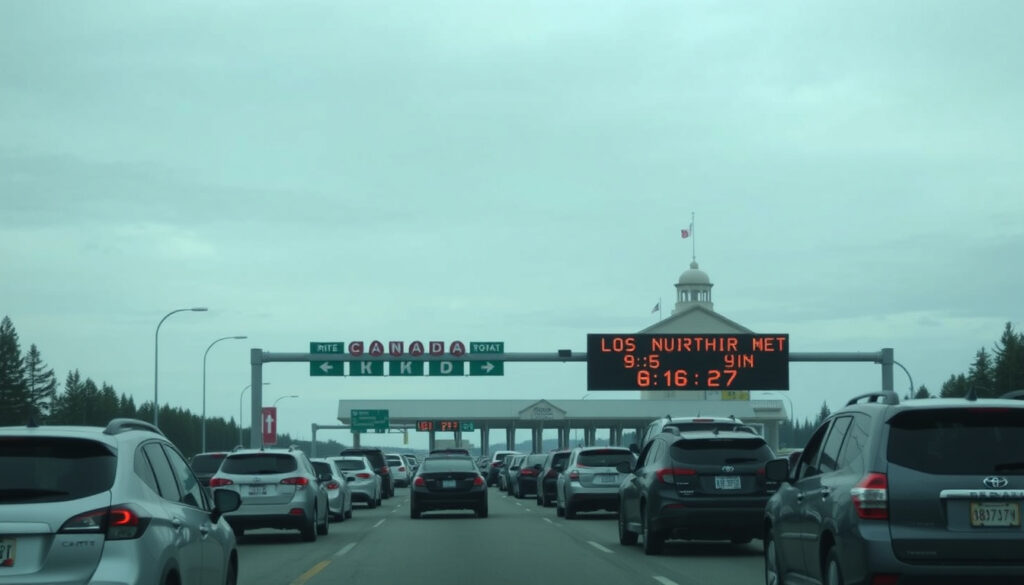
Canada to US Border Wait Times: Live Updates by Crossing
Anyone who’s driven from Vancouver to Peace Arch on a Friday afternoon has likely stared at a long line of brake lights. With more than 100 land ports connecting Canada and the U.S., wait times can swing from a breezy five minutes to well over an hour depending on the crossing, time of day, and season. Here we walk through the official tools that track those delays in real time, explain what affects the numbers, and help you pick the best portal for your next trip.
CBP SENTRI/NEXUS processing goal: 15 minutes · CBP Ready Lane processing goal: 50% of general traffic lane wait times · CBP Border Wait Times app availability: 24/7 on Google Play · CBSA wait times coverage: 29 busiest crossings (US to Canada) · Official US wait time tool: bwt.cbp.gov
Quick snapshot
- Exact current wait time at any given moment (changes dynamically)
- Effect of construction or incidents on specific crossings
- No major timeline events identified; wait times fluctuate daily.
The data below is drawn from official government sources and reflects typical patterns. Actual wait times at any given moment can differ — always check live tools before heading to the border.
Key facts about Canada–US border wait time resources are summarized in the following table.
| Label | Value |
|---|---|
| CBP processing goal for SENTRI/NEXUS | 15 minutes |
| CBP processing goal for Ready Lanes | 50% of general traffic lane wait times |
| Official US wait time tool | bwt.cbp.gov |
| Official Canada wait time tool (US to Canada) | cbsa-asfc.gc.ca/bwt-taf/ |
| CBP Border Wait Times mobile app | Available on Google Play and Apple App Store |
| Live camera feeds for BC border | CityNews Vancouver and WSDOT |
What are the Canada to U.S. border wait times in different provinces?
BC border crossings wait times
- British Columbia hosts the busiest Canada–U.S. border crossings in the west, including Peace Arch, Aldergrove, and Pacific Highway. According to CBP (U.S. Customs and Border Protection), wait times are estimated via a manual or line-of-sight method, and peak hours typically fall between 10 a.m. and 2 p.m. on weekends and summer Fridays.
- The Canada Border Services Agency (CBSA) provides wait times for the US-to-Canada direction at BC’s busiest crossings, but travelers heading southbound should rely on the CBP app or website.
- Live camera feeds from CityNews Vancouver (local news station) and the Washington State Department of Transportation (WSDOT) offer visual checks.
The pattern: BC’s southbound data comes from CBP, while northbound waits are tracked by CBSA — two separate systems that often show different congestion profiles for the same crossing.
Ontario border crossings wait times
- Ontario has multiple bridges at Niagara Falls (Rainbow, Whirlpool, Peace) plus the Ambassador Bridge and Windsor-Detroit Tunnel. The CBP Border Wait Times tool covers all of them for southbound traffic.
- CBSA shows 14 minutes for commercial and 8 minutes for travellers at Fort Erie (Peace Bridge) in a sample snapshot; at the Ambassador Bridge commercial flow was 15 minutes with no traveller delay.
- The Niagara International Transportation Technology Coalition (NITTEC) provides real-time traffic updates and border info for Western New York and Southern Ontario.
What are the border wait times at specific crossings like Peace Arch, Aldergrove, and Niagara?
Peace Arch border wait times
- Peace Arch (Blaine, WA) is one of the busiest crossings in the west. According to CBP, it offers standard, NEXUS, and Ready Lanes.
- Typical wait times on summer Saturdays can exceed 60 minutes in the afternoon; early mornings and late evenings are quieter.
The implication: Peace Arch’s heavy volume means even NEXUS holders face slower processing during peak tourist weekends.
Aldergrove border wait times
- Aldergrove (Lynden, WA) is a smaller crossing with shorter historical queues. According to CBP, it has NEXUS and standard lanes.
- Southbound waits at Aldergrove are often 10–30 minutes shorter than Peace Arch, especially during peak holiday periods.
The pattern: Aldergrove’s lower volume makes it the best alternative for southbound travellers willing to detour from the I-5 corridor.
Niagara border wait times
- The Niagara Falls crossings (Rainbow Bridge, Whirlpool Bridge, and Peace Bridge at Fort Erie) collectively see heavy tourist traffic. According to CBSA, Peace Bridge commercial flow can take 14 minutes or more while traveller lanes are faster.
- NITTEC’s real-time updates complement official numbers for the Ontario–New York region.
What are the southbound border wait times for BC?
Southbound vs northbound wait time differences
- Southbound (Canada to US) times are tracked by CBP; northbound (US to Canada) by CBSA. The data sets are separate and often show different patterns — a crossing that is fast southbound may have a queue northbound due to CBSA staffing.
- BC southbound travellers should check CBP Border Wait Times for Peace Arch, Aldergrove, and Pacific Highway.
What this means: checking only CBSA for a southbound trip gives no useful information — you need the CBP tool specifically.
Key BC southbound crossings
- Peace Arch (I-5 corridor) is the most direct route from Vancouver to Seattle.
- Aldergrove (Highway 13) offers a less crowded alternative, especially during summer weekends.
- Pacific Highway crossing (Highway 15) serves truck traffic and southbound passenger vehicles, with a dedicated truck lane.
The pattern is clear: Aldergrove and Pacific Highway generally see shorter delays than Peace Arch during peak hours. CBP’s live tool is your best bet for current numbers.
What are the wait times at Pacific border crossings?
Pacific Highway border crossing wait times
- Pacific Highway (Surrey, BC / Blaine, WA) is a major commercial and passenger crossing. According to CBP, it has standard, FAST, and SENTRI lanes.
- Wait times at Pacific Highway are comparable to Peace Arch but often lower for non-commercial travellers when truck traffic is heavy.
The implication: Pacific Highway serves as the best compromise for travellers who need commercial access but want shorter personal vehicle waits.
Other Pacific region crossings
- Additional ports include Abbotsford–Huntingdon (BC) and various smaller ferry-linked crossings in the San Juan Islands. These are lower volume but may close outside regular hours.
- For the most complete picture, use the CBP map view which shows all Pacific ports with live times.
If you’re crossing from the Lower Mainland, adding 10 minutes to drive to Pacific Highway or Aldergrove can save 30 minutes of waiting — a trade-off worth planning for.
How can I check real-time border wait times from Canada to the US?
Using the CBP Border Wait Times app
- Download the free CBP Border Wait Times app from Google Play or the Apple App Store.
- Select your port of entry and lane type (Standard, SENTRI, NEXUS, Ready Lane, or FAST).
- Read the estimated wait time and lane status. The app refreshes with each query.
The app is a free service provided by the U.S. Department of Homeland Security / CBP and breaks down times by lane type.
Using the CBSA wait times page (US to Canada)
- Visit CBSA Border wait times.
- Select your crossing from the list of 29 busiest ports.
- Check the columns for “Travellers flow” and “Commercial flow” — note that some crossings may show “Not applicable” for one type.
- CBSA advises refreshing the page for the latest update.
What this means: CBSA’s tool is only useful for northbound traffic — southbound travellers must use CBP instead.
Third-party tools and live cameras
- CityNews Vancouver provides live traffic cameras at Peace Arch and Pacific Highway.
- WSDOT offers road and border camera feeds for Washington State approaches.
- NITTEC covers the Ontario–New York region with real-time border crossing updates.
The trade-off: official tools are authoritative but only refresh periodically; live cameras let you see the queue length but require manual interpretation.
For the Canada-to-U.S. direction, the CBP app or website is the only sanctioned real-time tool. CBSA covers northbound only. Third-party cameras fill the gap but offer no numerical estimate. The consequence for travellers: relying on the wrong tool means guessing instead of knowing.
Comparison table: Major Canada–U.S. crossings at a glance
Five crossings, one pattern: Peace Arch and Niagara Falls see the longest peak-time delays, while Aldergrove and Pacific Highway offer consistent alternatives.
| Crossing | Lane types available | Typical peak wait (southbound) | Best for | Source |
|---|---|---|---|---|
| Peace Arch (BC) | Standard, NEXUS, Ready Lane | 30–60 min (Sat afternoon) | Direct Vancouver–Seattle route | CBP |
| Aldergrove (BC) | Standard, NEXUS | 10–20 min | Quick weekend crossings | CBP |
| Pacific Highway (BC) | Standard, SENTRI, FAST | 15–30 min | Truck and passenger combo | CBP |
| Rainbow Bridge (ON) | Standard, NEXUS | 20–40 min | Tourist access to Niagara Falls, NY | CBP |
| Peace Bridge / Fort Erie (ON) | Standard, NEXUS, FAST | 20 min (travellers), 14 min (commercial) | Buffalo–Toronto corridor | CBSA |
The implication: the crossing you choose can shift your wait from under 15 minutes to over an hour. For NEXUS holders, dedicated lanes at Peace Arch and Peace Bridge keep the goal at 15 minutes per CBP.
Upsides
- Official CBP and CBSA tools are free and authoritative.
- NEXUS lanes drastically reduce wait times (processing goal of 15 minutes).
- Multiple crossing options in BC and Ontario let you choose based on real-time data.
- Live cameras add a visual layer to numerical estimates.
- Mobile app available 24/7 for on-the-go checking.
Downsides
- Official numbers may lag by 10–20 minutes during rapid queue changes.
- CBSA only covers northbound direction; no single tool covers both directions for all crossings.
- Some crossings show “Not applicable” for commercial or traveller flow, reducing usefulness.
- Third-party tools like NITTEC are region-specific and not uniformly updated.
- Construction or special events can disrupt patterns without notice.
What we know — and what remains uncertain
Based on official sources, the following facts are confirmed:
- Official CBP and CBSA tools provide real-time estimates for wait times at major crossings.
- SENTRI/NEXUS lanes have a processing goal of 15 minutes per CBP.
- Wait times vary by time of day, day of week, and holidays, with Friday afternoons and long weekends being the longest.
What remains unclear: the exact wait time at any given moment (it changes dynamically) and the real-time impact of construction or incidents on specific crossings. Official tools are the best approximation but not perfect.
“Our Border Wait Times app breaks down wait times by lane type, including Standard, SENTRI, FAST, Ready Lane, and NEXUS — giving travelers the information they need to choose the fastest lane.”
— U.S. Customs and Border Protection (official border agency)
“The Canada Border Services Agency provides border wait time information for 29 of Canada’s busiest land border crossings with the United States, and we encourage travellers to refresh the page for the latest.”
— Canada Border Services Agency (federal border authority)
“NITTEC provides real-time traffic updates and border crossing information to travelers across Western New York and Southern Ontario.”
— Niagara International Transportation Technology Coalition (regional transport alliance)
Summary
For the traveler heading from Canada to the U.S., the choice of crossing and the time you cross will determine whether you spend 5 minutes or an hour in line. The official CBP Border Wait Times app and website cover all southbound ports; CBSA handles the northbound direction. NEXUS holders enjoy predictable 15-minute processing at most major crossings. For those without expedited status, planning around peak hours and using alternative ports like Aldergrove or Pacific Highway can make the difference between frustration and a smooth passage. For BC drivers, the implication is clear: check live data before you leave, choose Aldergrove on weekends, or take the NEXUS plunge.
Drivers can check live conditions using real-time Canada to US border wait tools to plan their crossing and avoid long delays.
Frequently asked questions
What is the fastest border crossing from Canada to the US?
For NEXUS holders, any major crossing with a NEXUS lane meets a 15-minute processing goal. Without NEXUS, Aldergrove (BC) and smaller ports like Abbotsford-Huntingdon often have shorter lines than Peace Arch or Niagara.
How early should I arrive at the Canada-US border?
Off-peak (before 7 a.m. or after 6 p.m.) you may need only 15–30 minutes. On summer weekends or holidays, plan for 45–90 minutes. Check live data via the CBP app before departing.
Do I need a NEXUS card to use expedited lanes?
Yes. NEXUS is required for NEXUS lanes. SENTRI and FAST have separate requirements. All are administered by CBP.
Can I check border wait times on my phone?
Yes. The CBP Border Wait Times app is free on Google Play and Apple App Store. CBSA’s mobile site works on any smartphone.
What documents do I need to cross from Canada to the US?
A valid passport, Enhanced Driver’s License, or Trusted Traveler card (NEXUS, SENTRI, FAST) is required for land crossings. Check the CBP website for current requirements.
Are wait times longer on weekends or holidays?
Yes. Friday afternoons, Saturdays, stat holidays, and long weekends (e.g., Victoria Day, Labour Day) see the longest queues. Sunday mornings are often quieter.
How often are border wait times updated?
CBP updates estimates on each request. CBSA updates its page periodically; both agencies recommend refreshing for the latest data.
More related posts
 Toronto Blue Jays Today: Game 6, Springer Injury & Salaries
 John Krasinski: Biography, Career, Net Worth & Family
 Drivers License Olivia Rodrigo: Lyrics, Meaning & Drama
 Saif Ali Khan: Attack, Wealth, Religion, and Family Life
 Oscar Isaac: Biography, Relationships, Health, and Ethnicity
 I JoJo Siwa Pregnant? Rumor , Health, and Per onal Life Update
 Chicago Fire Season 14 – Premiere Date, Cast and Episodes
