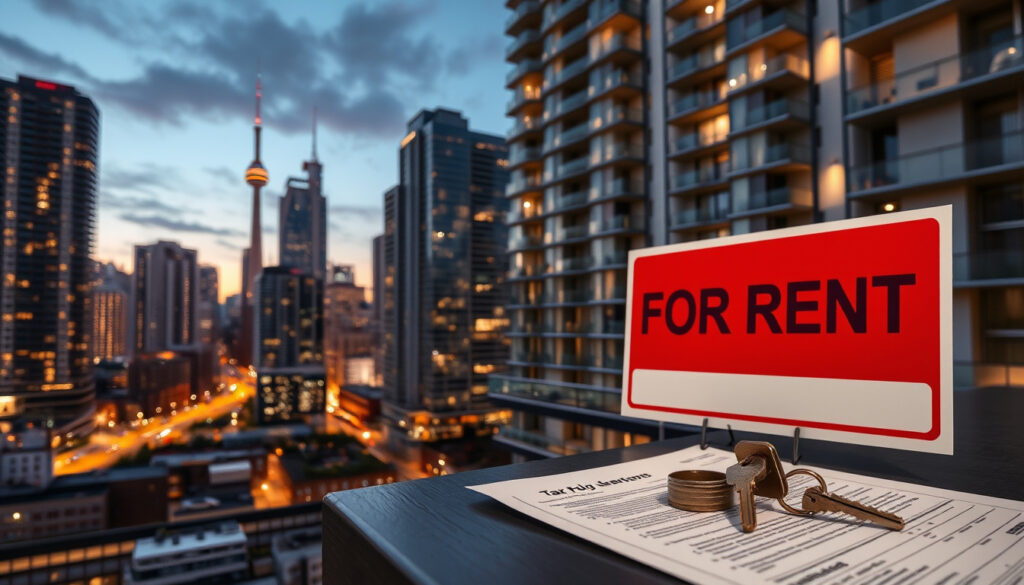
Short Term Rentals Toronto: Rules, Tax & Best Options
Short-term rentals in Toronto come with a hard rule: you can only rent out your primary residence, and the clock stops at 27 consecutive nights. Hotel prices are steep, but most leases demand a full year—this guide walks through the city’s rules, tax obligations, and the best platforms for finding a furnished stay that fits your timeline and budget.
Primary residence required: Operator must live in the unit ·
Max entire-home nights per year: 180 ·
MAT rate: 6% (8.5% temporary through July 2026)
Quick snapshot
- Short-term rentals legal only in principal residence (City of Toronto Good Operator Guide)
- Municipal Accommodation Tax (MAT) of 6% (temporarily 8.5% June 2025–July 2026) on stays under 30 nights (City of Toronto Good Operator Guide)
- Registration required; fee approximately $375/year (Guestable blog)
- Fines for non-compliance up to CAD 100,000 (Guestable blog)
- Exact enforcement consistency across all platforms (Tax Law Canada)
- Whether proposed new bylaw will lower the 180-night cap (Tax Law Canada)
- HST exemption for long-term stays may not apply to short-term rentals (Tax Law Canada)
- 2018: City introduced registration and principal residence rule
- 2022: Fines for unregistered rentals reached CAD 100,000
- 2023: Public consultation on new bylaw launched
- 2025–2026: Temporary MAT increase to 8.5% for FIFA World Cup
- New bylaw expected after consultation; may cap rental nights further (Tax Law Canada)
- CRA will disallow deductions for non-compliant rentals starting tax year 2024 (Tax Law Canada)
| Fact | Detail |
|---|---|
| City definition of short-term rental | All or part of a dwelling unit rented for less than 28 consecutive days (Bnbcalc guide) |
| Primary residence requirement | Operator must live in the unit (Bnbcalc guide) |
| Maximum consecutive nights | 27 nights (under 28 days) (Bnbcalc guide) |
| Municipal Accommodation Tax rate | 6% standard; 8.5% temporary June 2025–July 2026 (City of Toronto Good Operator Guide) |
| Annual registration fee (single room) | CAD 52.50 per room; CAD 375 for entire home (Guestable blog) |
| Liability insurance required | At least CAD 1 million (Bnbcalc guide) |
How do short-term rentals work in Toronto?
Typical lease duration and payment terms
Short-term rentals in Toronto operate on a nightly or weekly basis, with most platforms requiring payment upfront or at check-in. According to the Bnbcalc guide, the legal maximum is 27 consecutive nights—any stay of 28 nights or longer falls outside the short-term rental definition and is not subject to the city’s bylaw. Payment terms vary: Airbnb collects the full amount at booking, while Kijiji sublets often ask for first and last month’s rent.
- Most hosts require a damage deposit equivalent to one month’s rent
- Utilities and internet are typically included in furnished rentals
- Longer stays (7+ nights) often qualify for a 10–20% discount
Furnished vs unfurnished options
Almost all short-term rentals in Toronto come fully furnished. According to DelSuites corporate housing, their units include kitchenware, linens, and electronics—standard for the market. Unfurnished short-term stays are rare; if you need to bring your own furniture, look for a month-to-month lease that falls outside the bylaw (30+ days). The trade-off: longer unfurnished stays typically cost less per month but require a larger upfront effort.
The pattern: payment flexibility increases with stay length, but the 27-night ceiling governs all short-term bookings.
Are short-term rentals legal in Toronto?
City of Toronto short-term rental bylaw overview
Yes, short-term rentals are legal in Toronto—with a catch: you can only rent out your principal residence. The City of Toronto Good Operator Guide states that investment properties and secondary suites are not eligible. If you own a second home or a condo you don’t live in, you cannot list it for short-term stays. The bylaw applies citywide in residential and mixed-use zones (Bnbcalc guide).
- Entire home rentals capped at 180 nights per year
- Up to 3 private rooms can be rented without a night limit
- Registration number must appear in every listing
Registration requirements and penalties for non-compliance
Every operator must register with the city and pay an annual fee—roughly $375 for an entire home according to Guestable blog, though fees vary by unit type. Unregistered operators face fines up to CAD 100,000 per violation (Guestable blog). The city also requires hosts to keep detailed records and provide them upon request (Bnbcalc guide).
The primary residence rule is the single most restrictive condition. For homeowners outside the city who want to rent their Toronto condo, the bylaw effectively locks them out of the short-term market.
The implication: registration and principal-residence compliance are non-negotiable; skipping either invites fines and legal exposure.
What are the rules for short-term rentals in Toronto?
Primary residence requirement
As mentioned, the unit must be your primary home. The Bnbcalc guide clarifies that this applies to both entire-home rentals and room rentals. If you’re a tenant, you need your landlord’s permission and proof that the unit is your principal residence.
Maximum occupancy and noise rules
No more than three bedrooms can be advertised (Bnbcalc guide). Municipal noise bylaws apply: parties are not permitted, and quiet hours typically run from 11 p.m. to 7 a.m. The city’s City of Toronto Good Operator Guide advises hosts to include house rules in their listing.
Short-term rental insurance requirements
Operators must carry liability insurance of at least CAD 1 million (Bnbcalc guide). Standard home insurance policies often exclude short-term rental liability, so a separate policy is recommended. The pattern: compliance requires both municipal registration and adequate insurance—missing either leaves you exposed to fines and claims.
Do I have to pay tax on short-term rentals in Toronto?
Municipal Accommodation Tax (MAT)
Yes. The City of Toronto imposes a 6% Municipal Accommodation Tax on rentals under 30 nights—temporarily increased to 8.5% from June 1, 2025 to July 31, 2026 (City of Toronto Good Operator Guide). Hosts must collect this tax from guests and remit it to the city. The fee applies to every night stayed, including weekends and holidays.
Income tax reporting for short-term rental income
All rental income must be declared on federal and provincial tax returns. According to Tax Law Canada, short-term rental operators must also collect and remit GST/HST unless they qualify as small suppliers (earning less than CAD 30,000 per year). Starting tax year 2024, the CRA denies deductions for expenses related to non-compliant short-term rentals under section 67.7 (Tax Law Canada).
The 8.5% MAT rate during the FIFA World Cup period adds a significant cost for guests. For a week-long stay, that extra 2.5% on top of the usual 6% can eat into your budget—especially for popular downtown listings.
The catch: non-compliant hosts lose deduction eligibility, turning a registration oversight into a tax penalty.
Where can I find cheap short-term rentals in Toronto?
Budget-friendly neighborhoods
If you’re on a tight budget, look beyond downtown. Areas like Parkdale, Leslieville, and Scarborough offer lower average rents, often CAD 1,200–1,800 per month for furnished units (Bnbcalc guide). The trade-off: longer commutes to the core, but cheaper per-night rates.
Comparison of platforms: Kijiji, Airbnb, dedicated agencies
Choosing the right platform can save you money and headaches. Here’s a quick comparison:
Five platforms share one pattern: Airbnb offers reliability, Kijiji offers the lowest prices, and corporate housing provides predictability for longer stays.
| Platform | Typical monthly range | Furnished | Best for |
|---|---|---|---|
| Airbnb | CAD 1,500–3,000 | Yes | Tourists, business travelers |
| Kijiji | CAD 1,200–2,500 | Sometimes | Budget hunters, sublets |
| DelSuites | CAD 1,800–3,500 | Always | Relocation, corporate |
| Zillow | CAD 1,400–3,000 | Sometimes | Long-term commitment |
| Facebook Groups | Depends on post | Varies | Community deals |
The pattern: price and safety are inversely related—Kijiji saves money but carries scam risk, while Airbnb costs more but offers protection.
Discounts for longer stays (1 month+)
Booking for 30 or more days typically reduces the nightly rate by 20–40% (Bnbcalc guide). Many hosts on Airbnb offer monthly discounts, and corporate housing providers like DelSuites offer weekly and monthly packages. For stays of 3 months or more, you may qualify for a long-term lease that falls outside the short-term bylaw entirely.
What do Reddit users say about short-term rentals in Toronto?
Common complaints and praises on r/Toronto
Reddit users frequently warn about rental scams on Kijiji and Facebook Marketplace. Many recommend using established platforms like Airbnb for safety. Users advise to always meet the landlord, inspect the unit, and get a signed lease (r/Toronto).
Tips from Reddit for finding legitimate short-term rentals
Reddit users advise inspecting the unit in person or via video call before paying any deposit. They also recommend checking for the city registration number in listings and verifying the host’s identity (r/Toronto).
Are short-term rentals in Toronto available for 3 months?
Definition of long-term vs short-term by city bylaw
Rentals of 30 or more consecutive days are considered long-term under city rules. They are not subject to the short-term rental bylaw, meaning you can rent without the principal-residence restriction and without collecting MAT (City of Toronto Good Operator Guide).
Monthly rental rates and tenant protections
Furnished apartments for 3 months typically cost CAD 2,000–3,500 per month. Tenants in long-term rentals (30+ days) gain protections under the Residential Tenancies Act, which does not apply to short-term stays (Bnbcalc guide).
Platforms specializing in 3-month stays
Corporate housing agencies like DelSuites offer dedicated 1-3 month packages. Airbnb also has filters for monthly stays, and some Kijiji listings specifically target relocating professionals (DelSuites corporate housing).
Step-by-step: How to rent a short-term property in Toronto
- Define your dates and budget. Know exactly how many nights you need. Stays under 28 days are short-term; 28 nights or more are long-term and not regulated by the bylaw.
- Choose a platform. Airbnb for reliability, Kijiji for low cost, DelSuites for corporate housing.
- Check the registration number. Every legal listing must display a city-issued registration number. If it’s missing, ask the host—or move on.
- Ask about tax. Confirm whether the host collects MAT (6% or 8.5%) and whether GST/HST is added. Get a receipt.
- Inspect the unit. Always visit in person or do a video call. Reddit users frequently warn about scams (r/Toronto).
- Get a signed agreement. Even for short stays, a written lease protects both parties. Include house rules, cancellation policy, and utility inclusions.
The pattern: due diligence on registration and tax separates legitimate stays from costly mistakes.
Confirmed facts
- Short-term rentals under 28 days regulated by city bylaw (City of Toronto Good Operator Guide)
- Operators must register and pay MAT (City of Toronto Good Operator Guide)
- Primary residence requirement enforced (Bnbcalc guide)
- Fines up to CAD 100,000 for non-compliance (Guestable blog)
What’s unclear
- Exact enforcement consistency across platforms
- Whether proposed new bylaw will lower the 180-night cap
- HST exemption for long-term stays may not apply to short-term rentals (Tax Law Canada)
The takeaway: what is confirmed anchors the decision—register, collect tax, and live on-site—while the unclear items represent risks that renters should monitor.
Quotes from industry and community
“The primary residence requirement is the foundation of Toronto’s approach. It prevents investors from turning residential neighborhoods into de facto hotels.”
— City of Toronto Good Operator Guide
“Short-term rental income is taxable just like any other business income. The CRA’s new deduction denial for non-compliant rentals is a serious risk for unregistered hosts.”
— Tax Law Canada
“Booking through Airbnb is safer than Kijiji, but you pay a premium. I’ve had good luck finding month-to-month furnished units on Facebook Marketplace.”
— Reddit user r/Toronto (anonymized)
What this means: The consensus among regulators, tax experts, and actual renters is clear—compliance saves money and avoids legal headaches. The risk of scams on unvetted platforms is real, but the savings can be worthwhile if you know what to look for.
Frequently asked questions
Do I need a license to rent my apartment short-term in Toronto?
Yes, you must register with the City of Toronto and obtain a short-term rental registration number. The annual fee is approximately $375 for an entire home (Guestable blog).
How much is the short-term rental tax in Toronto?
The Municipal Accommodation Tax is 6% on stays under 30 nights. From June 1, 2025 to July 31, 2026, it rises to 8.5% (City of Toronto Good Operator Guide).
Can I rent a room in my house for less than 28 days?
Yes, as long as you live in the house (it’s your primary residence) and you have a valid registration. Up to three rooms can be rented with no night limit (Bnbcalc guide).
What happens if I rent short-term without registering?
You risk fines up to CAD 100,000 per violation and potential legal action from the city. Additionally, the CRA may deny your tax deductions for any expenses related to unregistered rentals (Tax Law Canada).
Are there any neighborhoods in Toronto where short-term rentals are banned?
No neighborhood is entirely banned, but the bylaw applies only to principal residences. Some condo buildings have their own rules that may prohibit short-term rentals—check with your condominium board.
How do I report a short-term rental scam?
Contact the City of Toronto’s short-term rental compliance team at str-compliance@toronto.ca or call 311. For online scams, report to the platform (Airbnb, Kijiji) and the Canadian Anti-Fraud Centre.
Can I deduct expenses from short-term rental income?
Yes, you can deduct expenses like utilities, cleaning fees, and platform commissions. However, if your rental is not compliant with city regulations, the CRA will disallow all deductions starting tax year 2024 (Tax Law Canada).
Related reading: Cheap Flights from Toronto to Calgary · Maison A Vendre Boucherville
For Toronto visitors and short-term hosts, the choice is clear: comply with the bylaw, register, collect MAT, and declare your income—or face fines and lost deductions. The temporary MAT increase adds a real cost, but the city’s stance is firm. Use vetted platforms, inspect units, and always get a signed agreement.
More related posts
 Travis Dhanraj Resignation: What Happened and His Testimony
 165 cm to Inches – Precise Conversion and Height Context
 Anna Lambe: Biography, Age, Nationality & True Detective Role
 Holy Spirit: Biblical Identity, Role & Misconceptions
 NFL Picks This Week: Expert Predictions for Week 8
 Saudi Arabian: Nationality, Travel Rules, and Key Facts
 Rock Lee: Canon Facts, Power, Love Life, and Fights
 Mary-Kate Olsen: Net Worth, Health, and Life Facts
