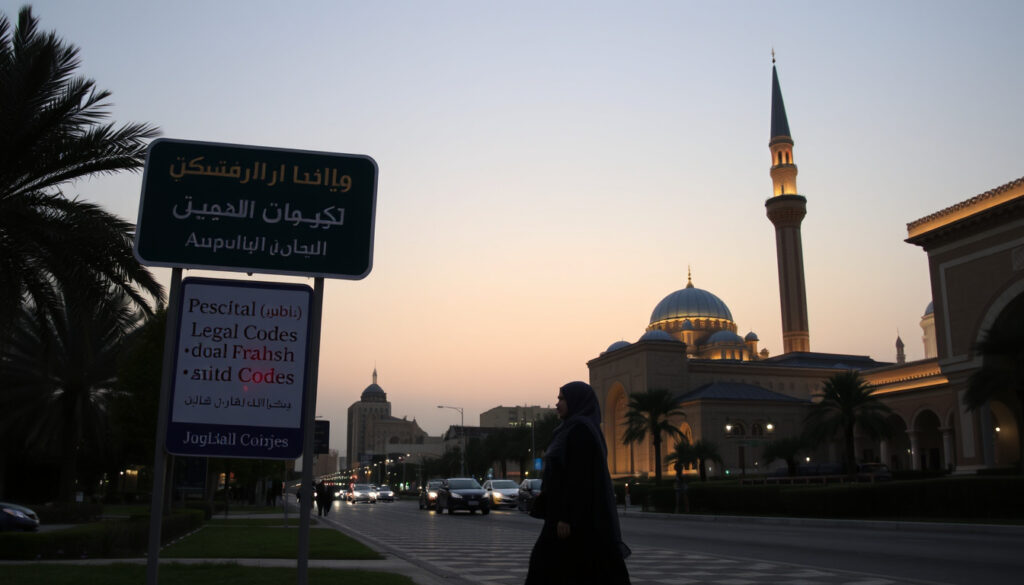
Saudi Arabia Travel Guide: Safety, Dress Code, Laws
If you’re planning a trip to Saudi Arabia, you probably have a mix of curiosity and caution. The country opened to tourists just a few years ago, and many travelers are still sorting through what’s allowed, what’s frowned upon, and what actually carries legal consequences.
Area: Approximately 2.15 million square kilometers ·
Population (2023): Around 35 million ·
Official religion: Islam ·
Official currency: Saudi riyal (SAR) ·
Tourist visa introduced: 2019
Quick snapshot
- Violent crime rates are low; tourist areas heavily patrolled (Forbes business analysis)
- Women no longer required to wear abaya in public (UK GOV.UK Foreign Travel Advice)
- Public kissing illegal and can lead to arrest (U.S. Department of State Travel Advisory)
- Exact legal penalties for public displays of affection (U.S. State Department official advisory)
- Hotel enforcement policies for unmarried couples (Smartraveller Australian government)
- Specific official guidance on dress code enforcement for tourists (UK GOV.UK official travel advice)
- Tourist visa rollout began in 2019 (Wikipedia general reference)
- Abaya requirement relaxed for foreign women after 2019 (Explore Saudi travel guide)
- New tourism law formalized regulatory framework in 2020 (Al Tamimi & Company legal analysis)
- Further visa expansions expected for more nationalities (Visit Saudi official tourism site)
- More hotel and entertainment developments under Vision 2030 (Al Tamimi & Company legal insight)
- Ongoing adjustment of social norms for international visitors (House of Saud travel blog)
Eight key facts at a glance, one pattern: the official identity of Saudi Arabia balances Islamic tradition with a modernizing tourism push.
| Fact | Value |
|---|---|
| Official name | Kingdom of Saudi Arabia |
| Capital | Riyadh |
| Language | Arabic |
| Currency | Saudi riyal (SAR) |
| Time zone | UTC+3 (AST) |
| Flag colors | Green with white Arabic inscription and sword |
| Main airline | Saudia |
| UNESCO World Heritage sites | 6 (as of 2023) |
Is it safe to go to Saudi Arabia now?
General safety for tourists
The most common question from first-time visitors is whether Saudi Arabia is safe. Official advisories from multiple governments point to a low violent crime environment. The U.S. State Department official travel advisory notes that tourist areas are heavily patrolled by police and that travelers report feeling safe, including women traveling alone. Forbes business travel analysis reports that crime is low according to official sources, while the main risks are practical rather than typical street crime.
For a destination that many Americans imagine as dangerous, the actual safety data is unexpectedly reassuring. The risk is not violent crime, but inadvertently breaking a local law.
Crime rates and security
- Violent crime statistics are low compared to many Western countries (U.S. State Department official data)
- Canada currently advises avoiding non-essential travel due to regional security risks, not street crime (Travel.gc.ca official Canadian advisory)
- Petty theft is reportedly low in tourist zones (Smartraveller Australian government advisory)
The pattern is clear: the threat landscape is about geopolitical tensions, not everyday crime. For the typical tourist staying in Riyadh, Jeddah, or the Al-Ula region, the biggest adjustment is understanding the legal and cultural rules rather than worrying about personal safety.
Can girls wear shorts in Saudi Arabia?
Dress code for women in public
One of the biggest changes in recent years is the relaxation of the female dress code. The UK Foreign Travel Advice official government guidance states that women are not required to wear an abaya in public. However, both men and women must wear loose-fitting clothing that covers the elbows and below the knees. The U.S. State Department official advisory adds that women should cover shoulders and knees and avoid tight clothes or offensive graphics.
- Shorts are not considered appropriate in most public places (UK GOV.UK official guidance)
- Many local women still wear abayas, but tourists can choose modest Western clothing (Smartraveller Australian government)
The dress code is not enforced uniformly. In Jeddah, standards tend to be more relaxed than in Riyadh. But enforcement can be unpredictable, and a tourist who ignores the modesty expectation risks being asked to leave a shopping mall or receiving a warning from the mutawwa’een (religious police).
Differences between Riyadh and Jeddah
Riyadh, the capital, is more conservative. Jeddah, a Red Sea port city, has a slightly more international feel. Explore Saudi travel guide notes that modest dress is still strongly recommended even where formal requirements have been relaxed. The safest rule: pack clothes that cover shoulders, elbows, and knees, and leave shorts for private accommodation.
Why this matters: a simple packing mistake can turn a relaxing trip into an awkward encounter. Invest in breathable, modest clothing and you’ll avoid the problem entirely.
Are Christians allowed in Saudi Arabia?
Religious freedom for foreigners
Yes, Christians can live and work in Saudi Arabia. The U.S. State Department official travel advisory confirms that non-Muslim foreigners are permitted to reside in the country, but public practice of any religion other than Islam is prohibited. Private worship in homes is tolerated, though not legally protected.
- Churches and temples are not allowed to be built (UK GOV.UK official guidance)
- Religious materials like Bibles or crosses brought into the country are technically prohibited and can be confiscated at customs (Smartraveller Australian government advisory)
Private worship vs public practice
While private assemblies of Christians are generally ignored, public displays are illegal. The U.S. State Department official guidance advises against bringing any religious items that could be seen as proselytizing. The legal framework has not changed: conversion from Islam is punishable by death, but this law is rarely enforced against foreigners.
The trade-off: you can live, work, and visit as a Christian, but you cannot practice openly. For many travelers, this is a minor constraint; for those who wear a cross visibly or want to attend a church service, it’s a real limitation.
Can I kiss my wife in public in Saudi?
Public display of affection laws
No. Kissing in public is illegal in Saudi Arabia and can result in fines, arrest, or deportation. The U.S. State Department official travel advisory explicitly states that public display of affection, including kissing, is prohibited. The UK GOV.UK official guidance similarly warns that any romantic gestures in public are unacceptable.
- Holding hands between married couples is generally accepted (Smartraveller Australian government)
- Any more intimate contact can be reported by citizens or police (U.S. State Department official advice)
Consequences for violations
Penalties vary. The exact amounts are not published in a single official source, but Forbes business travel analysis notes that travelers have been detained for public kissing, sometimes for weeks. The safest approach: treat all public spaces as if you are being watched—because you might be.
The catch: even a brief peck on the cheek to greet someone of the opposite sex (not your spouse) could be misinterpreted. For same-sex companions, physical affection like hand-holding is also not customary and may draw unwanted attention.
Can I stay in a hotel with my girlfriend in Saudi?
Hotel policies for unmarried couples
Officially, unmarried couples are prohibited from sharing a hotel room in Saudi Arabia. The UK Foreign Travel Advice official guidance states that hotels may request a marriage certificate upon check-in. However, enforcement varies greatly.
- Many international hotel chains in Riyadh and Jeddah do not ask for proof (Smartraveller Australian advisory)
- If caught, penalties can include fines and deportation (U.S. State Department official warning)
- Budget hotels and local guesthouses are more likely to enforce the rule than premium international hotels (Explore Saudi travel guide)
Changes in recent years
The official tourism law, updated in 2020 (Al Tamimi & Company legal analysis), created a formal regulatory framework for tourism, but it did not override conservative social norms. In practice, foreign couples who are both non-Muslims are often accommodated without issue, especially when they check in looking professional and avoid drawing attention to their relationship status.
You might get the room, but if a front desk clerk reports you, the consequences are real. The safest bet for unmarried couples: book separate rooms or an Airbnb that doesn’t require ID for both guests.
What is the biggest cause of death in Saudi Arabia?
Leading causes of mortality
According to the World Health Organization, ischemic heart disease is the top cause of death in Saudi Arabia. WHO data global health statistics shows that non-communicable diseases dominate the mortality profile, with road traffic injuries also a significant contributor. The UK Foreign Office official travel advice notes that road accidents are a risk due to high-speed driving and variable road conditions.
- Ischemic heart disease: leading cause (WHO global health body)
- Road traffic injuries: second leading cause of death for men 15–44 (WHO statistics)
- Diabetes and hypertension are also high due to lifestyle factors (WHO country data)
Why this matters: if you have a pre-existing heart condition or diabetes, ensure you have adequate travel health insurance and carry your medications, as local pharmacies may not stock your specific brand.
Confirmed facts
- Tourist visa introduced in 2019 (Visit Saudi official site)
- Women no longer required to wear abaya (UK GOV.UK official)
- Public kissing is illegal (U.S. State Department official)
- Ischemic heart disease is the leading cause of death (WHO health authority)
What’s unclear
- Exact fines for public affection (U.S. State Department advisory)
- Hotel enforcement for unmarried couples (UK GOV.UK guidance)
- Official dress code enforcement for tourists (Smartraveller Australian gov)
What official sources say
“We welcome tourists from all over the world. Our goal is to provide a safe and memorable experience.”
“Travelers should respect local customs and laws. Modest dress and conservative behavior are expected in public.”
U.S. Department of State official travel advisory
Your move as a traveler
Saudi Arabia is not the high-risk destination many imagine, but it demands a level of cultural compliance that surprises most Western tourists. The country has modernized rapidly since 2019, yet its legal and social framework remains firmly rooted in Islamic conservatism. For the American or European traveler, the choice is clear: do your homework on dress codes and public behavior, or risk a trip that becomes more about bureaucratic trouble than discovering the Empty Quarter and the Red Sea coast.
For a deeper dive into the latest rules and cultural norms, check out this comprehensive Saudi Arabia travel guide that covers everything from dress code to hotel policies.
Frequently asked questions
What are the visa requirements for visiting Saudi Arabia?
Tourist visas are available online through the official Visit Saudi official portal. Most nationalities can apply for an e-visa or visa on arrival. Requirements include a valid passport with at least six months validity and a return flight ticket.
Can I drink alcohol in Saudi Arabia?
No. Alcohol is strictly prohibited throughout the country. Possession, consumption, or being under the influence in public can lead to fines, imprisonment, or deportation. U.S. State Department official advisory warns that penalties are severe.
Is the internet and social media censored in Saudi Arabia?
Yes. The government blocks websites deemed immoral or critical of the state. UK GOV.UK official guidance notes that VPNs are technically prohibited, though many travelers use them without issue. Exercise caution when accessing content that could be considered political or religious.
What should women pack for a trip to Saudi Arabia?
Pack flowing trousers, long skirts, tops with sleeves to the elbow, scarves for optional head covering, and a lightweight jacket for air-conditioned venues. Avoid shorts, leggings as outerwear, and clothing with logos or slogans. Smartraveller Australian advisory provides a packing checklist.
Are there any areas tourists should avoid in Saudi Arabia?
Travel advisories from Travel.gc.ca Canadian government advise avoiding areas within 80 km of the Yemen border, the Qatif region, and villages in the Eastern Province. Major tourist hubs like Riyadh, Jeddah, and Al-Ula are considered safe.
More related posts
 Legia Warszawa vs Chelsea – Match Report and Key Insights
 Queen Elizabeth: Life, Relationships, and Legacy of Britain’s Longest-Reigning Monarch
 How to Fix Slow Startup Windows 10 & 11 in 7 Steps
 Marc Anthony: His Music, JLo Marriage, Beckham Friendship
 Tom Felton: Sobriety, Collapse, and Friendships
 Gyu-Kaku Japanese BBQ: Meaning, Menu, Locations & More
 Canada to US Border Wait Times: Live Updates by Crossing
 Kevin Wenstob Net Worth: How Much Is the Big Timber Logger Worth
