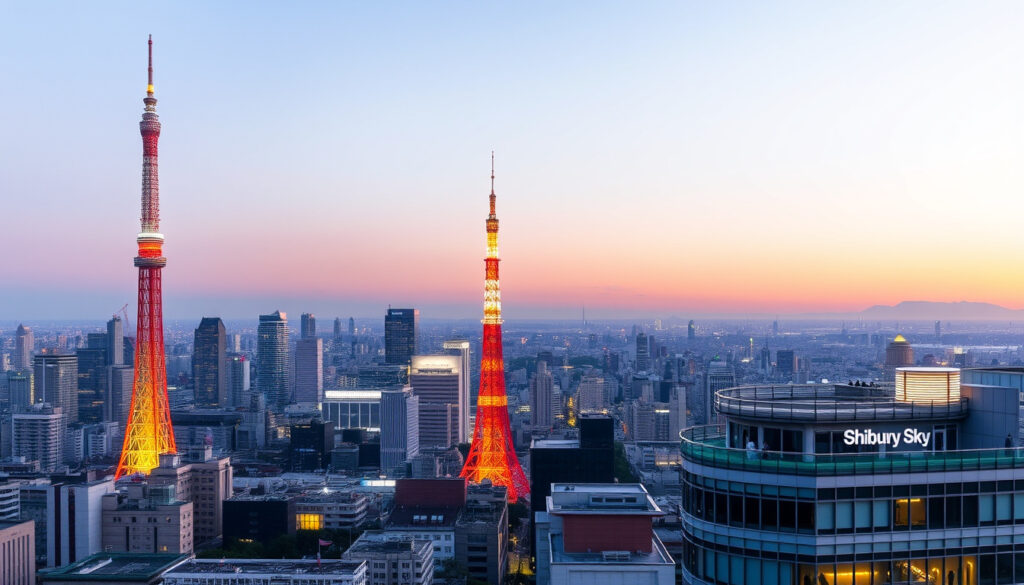
Tokyo Skytree: Worth It vs Tokyo Tower & Shibuya Sky
Standing under a roof in Tokyo, you’re never far from a decision: which city view is worth your time and yen. Tokyo Skytree, the broadcasting tower that pierces the Sumida skyline at 634 meters, draws millions of visitors each year — but its extreme height also means you’re looking down on a lot of haze, not up at a perfect postcard.
Height: 634 m (2,080 ft) ·
Tallest tower in Japan: Yes ·
Opened: 2012 ·
Observation decks: Tembo Deck (350 m) & Tembo Galleria (450 m) ·
Location: Sumida, Tokyo
Quick snapshot
- Height claimed by official site: 634 m (TOKYO SKYTREE official ticket page)
- Tembo Deck at 350 m, Tembo Galleria at 450 m (TOKYO SKYTREE official ticket page)
- Opened May 22, 2012 (Wikipedia)
- Whether the cost is justified compared to Tokyo Tower or Shibuya Sky
- Whether Mt. Fuji will be visible on a given day
- Which observation deck offers a “better” experience — purely personal preference
- Opened in 2012, has operated daily since
- No announced change in ticket pricing or deck access (as of 2025)
- Book advance tickets online to avoid queues
- Visit on a clear winter morning for best visibility
| Attribute | Value |
|---|---|
| Height | 634 m (2,080 ft) |
| Location | Sumida, Tokyo, Japan |
| Opened | May 22, 2012 |
| Main observation deck | Tembo Deck at 350 m |
| Upper observation deck | Tembo Galleria at 450 m |
| Architect | Nikken Sekkei |
Is it worth going up the Tokyo Skytree?
Upsides
- Uninterrupted 360‑degree panorama up to 450 m — the highest public viewpoint in Japan
- Two distinct deck experiences: the glass‑floored Tembo Deck and the spiraling Tembo Galleria
- Integrated shopping, dining, and aquarium — a half‑day destination, not just a lookout
Downsides
- Ticket prices start at ¥1,800 for the deck and ¥3,000 for the combo — higher than Tokyo Tower’s main deck (TOKYO SKYTREE official ticket page)
- Distance from central Tokyo means the city below can look hazy or featureless on overcast days
- Popular times (late afternoon, weekends) lead to long queues
Ticket Prices and Value
The official website lists two main adult tickets: the Tembo Deck only at ¥1,800 and the combo (Deck + Galleria) at ¥3,000 (TOKYO SKYTREE official ticket page). Children (6–14) pay ¥1,400 for the deck and ¥2,500 for the combo, while toddlers under 6 require a separate infant ticket. This age‑band structure differs from Tokyo Tower, which uses adult/high‑school/child/infant categories (Tokyo Tower official fee page).
For budget‑conscious visitors, the deck‑only option offers the same 350 m view without the higher‑priced Galleria. But if you’re after the full experience, the combo is the clear choice — the Galleria’s spiral ramp and glass floor add a genuinely different perspective.
Alternative Viewpoints
Tokyo Tower’s Main Deck (150 m) costs only ¥1,500, and Shibuya Sky (≈230 m) charges ¥2,700 before 15:00 and ¥3,400 after (Tokyo Tower official fee page; GO TOKYO Shibuya Sky listing). If your goal is simply to see Tokyo from above without spending ¥3,000, Tokyo Tower gives you a cheaper, iconic silhouette. Shibuya Sky’s open‑air rooftop provides a unique skyline shot but at a similar price point to Skytree’s combo.
The trade-off: Height vs. proximity. Skytree’s 450 m platform is the highest in Tokyo, but the view is more abstract; Tokyo Tower’s lower decks keep you closer to the neon pulse of the city. Shibuya Sky sits right in the middle, both in price and height.
Tokyo Skytree’s extreme height is its biggest selling point and its biggest weakness. You get a breathtaking vertical perspective, but the haze, distance, and crowded lobbies can make the experience feel detached from the city. Visitors who value intimacy and on‑the‑ground energy may prefer the lower decks of Tokyo Tower.
What’s so special about Tokyo Skytree?
Height and Architecture
At 634 m, Tokyo Skytree is the tallest tower in Japan and the second tallest structure in the world after the Burj Khalifa. Its design blends a modern steel frame with traditional Japanese engawa (veranda) aesthetics — a nod to the country’s architectural heritage, as noted by its architect Nikken Sekkei (TOKYO SKYTREE official about page). The tower’s triangular base morphs into a circle as it rises, optimizing wind resistance and light reflection.
- Base: 68 m in diameter, tapers to a slim broadcast spire
- Built to withstand earthquakes up to magnitude 7.5
- Functions as a digital TV and radio broadcast tower, replacing the older Tokyo Tower for many signals
Observation Decks and Galleria
- Tembo Deck (350 m): Glass floor panels let you look straight down; wide‑angle windows frame the city below.
- Tembo Galleria (450 m): A 110‑meter spiraling corridor with floor‑to‑ceiling windows and a glass‑floored overlook. Access requires the combo ticket.
Both decks are accessed by dedicated high‑speed elevators. On a clear day, the view stretches across the Kanto Plain and even to Mt. Fuji (more on that later).
Dining and Shopping
Below the decks — literally — the Tokyo Solamachi complex offers 300+ shops and restaurants. You can eat ramen or sushi while watching the tower’s lower structure, and the Sumida Aquarium is on the 5th and 6th floors. This turns a 45‑minute visit into a half‑day outing if you’re traveling with family.
The implication: If you treat Skytree as a destination, not just a view, the ticket price and time commitment make more sense. Solo travelers who only want a quick skyline snap may find better value at Shibuya Sky or Tokyo Tower.
Which one is better, Skytree or Tokyo Tower?
Comparing Heights and Views
Tokyo Tower stands 333 m tall — about half of Skytree’s height. Its Top Deck reaches 250 m, still 100 m below Skytree’s lowest public deck. The difference is stark: from Tokyo Tower you feel embedded in the city; from Skytree you feel on top of the world. For photographers who want the classic Tokyo skyline (with Tokyo Tower itself in the frame), the lower decks actually provide a better composition.
Comparing Prices and Crowds
A quick comparison table gives the numbers at a glance.
Three observation points, three price brackets — but the value equation isn’t linear with height.
| Feature | Tokyo Skytree | Tokyo Tower | Shibuya Sky |
|---|---|---|---|
| Height (observation) | 350 m / 450 m | 150 m / 250 m | ~230 m |
| Adult entry (lowest) | ¥1,800 (deck only) | ¥1,500 (Main Deck) | ¥2,700 (before 15:00) |
| Adult entry (premium) | ¥3,000 (combo) | ¥3,300–¥3,500 (Top Deck) | ¥3,400 (after 15:00) |
| Built | 2012 | 1958 | 2019 |
| Crowd level | High (tourist magnet) | Moderate | High (trending) |
Prices from official sources: Tokyo Skytree official ticket page, Tokyo Tower official fee page, GO TOKYO Shibuya Sky listing, Nightscape Tokyo
Shibuya Sky as a Third Option
Shibuya Sky’s open‑air deck at about 230 m offers an immersive rooftop experience that Skytree and Tokyo Tower can’t match — you feel the wind and hear the city. Its time‑based pricing (¥2,700 early, ¥3,400 late) means afternoon visits cost more than Skytree’s combo, but you get 360‑degree views without a glass barrier. The trade‑off is height: Shibuya Sky sits lower, so the city below feels closer but you miss the grander horizon.
The pattern: Skytree wins on raw height and full‑day amenities; Tokyo Tower wins on price and vintage charm; Shibuya Sky wins on open‑air intimacy. Your choice depends entirely on what kind of memory you want.
If you’re only doing one observation deck in Tokyo, Skytree’s height makes it the default choice for first‑timers. But repeat visitors and locals consistently say that Tokyo Tower feels more “Tokyo” — compact, nostalgic, and right in the middle of the action. Shibuya Sky appeals to the Instagram crowd and sunset‑chasers.
How much time do I need at Tokyo Skytree?
Recommended Duration
Most visitors spend 2 to 3 hours for the full experience — that covers the elevator ride, both decks, a quick look at the gift shop, and maybe a coffee. If you include a meal at one of the Solamachi restaurants, plan for 3 to 4 hours.
- Deck only (Tembo Deck): 45–60 minutes
- Combo (Deck + Galleria): 90–120 minutes
- With dining/shopping: add 1–2 hours
Sample Itinerary
- 10:00 – Arrive at Oshiage Station, pick up pre‑booked tickets
- 10:15 – Take elevator to Tembo Deck (350 m), explore glass floor (20 min)
- 10:45 – Proceed to Tembo Galleria (450 m), spiral walk + photos (30 min)
- 11:30 – Descend, browse Solamachi shops or grab lunch
- 13:00 – Depart
Tips for a Quick Visit
- Book tickets online in advance – you skip the long queue at the ticket counter
- Visit on a weekday morning (the quietest window is 9:00–11:00)
- If you’re short on time, skip the Galleria and stick to the Tembo Deck – the view is fundamentally the same
The catch: If you only allocate one hour, you’ll miss the Galleria and likely queue for the elevator anyway. Two hours is the sweet spot for a satisfying visit.
Can you see Mt. Fuji from Skytree?
Best Conditions for Viewing
On clear winter mornings, Mt. Fuji is visible from the observation decks — roughly 100 km away. The best months are December through February, when cold air clears the haze. Visibility is almost non‑existent in summer due to humidity.
- Time of day: early morning (before 10:00) offers the clearest air
- Seasons: winter > autumn > spring > summer
- Check live weather cams or the official Skytree website for real‑time visibility updates
Alternative Spots for Mt. Fuji Views
- Tokyo Tower – From its 250 m Top Deck, you can also see Fuji on clear days, but the shorter height means the view is partially blocked by buildings.
- Shibuya Sky – Its open roof gives an unobstructed horizon, but the 230 m height means Fuji appears smaller.
- Roppongi Hills Mori Tower – Similar height to Tokyo Tower’s top deck, often recommended by photographers for Fuji shots.
What to Expect
Be honest: you cannot guarantee a Fuji sighting. Many visitors leave disappointed. If Fuji is your main goal, check the forecast, go early, and have a backup plan (like Tokyo Tower). Otherwise, enjoy the city panorama — even without Fuji, the scale of Tokyo from 450 m is impressive.
What this means: If you’re chasing the Fuji photo, don’t build your entire trip around Skytree. Use it as a bonus, not the main event.
Clarity: what we know and what we don’t
Confirmed facts
- Height: 634 m, tallest tower in Japan
- Two observation decks: Tembo Deck (350 m) and Tembo Galleria (450 m)
- Opened May 22, 2012
- Adult combo ticket: ¥3,000
- Tokyo Tower Main Deck: ¥1,500; Shibuya Sky: ¥2,700–¥3,400
What’s unclear
- Whether the higher cost is worth it for you personally
- Whether Mt. Fuji will be visible on your visit day
- Which deck offers the “better” experience — depends on your priorities
“Tokyo Skytree offers two observation decks: Tembo Deck at 350 meters and Tembo Galleria at 450 meters.”
— Official Tokyo Skytree website (TOKYO SKYTREE official ticket page)
“Tokyo Skytree is the tallest tower in Japan and the second tallest structure in the world.”
— Wikipedia (Wikipedia)
The choice between Tokyo’s observation decks isn’t about good vs. bad — it’s about fit. Tokyo Skytree gives you the highest vantage point and the most attached activities, but its ticket price and distance from the city center mean you need 2–3 hours and a clear day to truly enjoy it. For the budget‑conscious traveler who wants a quick, iconic view, Tokyo Tower at ¥1,500 remains the best deal. And for the traveler who values an open‑air, urban rooftop vibe, Shibuya Sky’s late‑day pricing can be a worthy splurge. For the first‑time visitor staying in central Tokyo, the smartest move is to start with Tokyo Tower and upgrade to Skytree only if you want the height — or if Mt. Fuji is forecasted to cooperate.
jrpass.com, skytreetickets.tokyo, skytreetickets.tokyo, zh.tokyotower.co.jp, tokyocheapo.com, jasumotickets.com, japan-guide.com, trip.com
For a detailed breakdown of how the Skytree stacks up against other Tokyo towers, check out this height and view comparison.
Frequently asked questions
What is the best time to visit Tokyo Skytree?
Weekday mornings (9:00–11:00) are the quietest. For clear views, visit in winter on a day with low humidity.
Are there restaurants at Tokyo Skytree?
Yes. The Tokyo Solamachi complex below the tower has over 50 dining options, and the Tembo Deck itself includes a café.
How do I get to Tokyo Skytree?
Take the Tobu Skytree Line to Oshiage Station (direct connection) or the Tokyo Metro Hanzomon Line to Oshiage (exit B3).
Is Tokyo Skytree wheelchair accessible?
Yes. Both observation decks, elevators, and most facilities are designed for wheelchair access. Wheelchairs are available for loan.
Can I buy tickets at the door?
Yes, but queues can be long — especially on weekends. Online advance booking is strongly recommended.
What is the Tembo Galleria?
The Tembo Galleria is the name of the upper observation deck at 450 m. It is accessed via a separate elevator from the Tembo Deck and features a spiraling glass ramp.
What is the official name of Tokyo Skytree?
The official name is Tokyo Skytree ( ). It is a registered trademark of Tobu Railway Group.
More related posts
 Hank Williams Death: Cause, Last Words & Family Secrets
 ASAP Rocky Acquitted: Gun Assault Trial, Biography & Family
 Nelson Peltz Net Worth vs. Beckhams: How He Got Rich
 Rick Salomon Net Worth, Poker Earnings, and Relationships
 Miley Cyrus: Health, Gender Identity & Relationship Facts
 Michele Lamy: Beliefs, Age, and the High Priestess of Paris
 Avatar: The Way of Water Box Office, Sequels & Key Facts
 Sally Field: Biography, Health, and Relationships
